


DevOps Course with Placement Bangalore
Looking for a practical and career-focused devops course with placement bangalore? Fast Learning Technologies offers a structured DevOps training program designed for students
Online/Offline
Mode
3 - 4 Months
Duration
5+Live
Real time projects
Industry Recognized
Certification
About DevOps Institute Courses
Looking for a practical and career-focused devops course with placement bangalore? Fast Learning Technologies offers a structured DevOps training program designed for students, fresh graduates, working professionals, system administrators, software developers, cloud learners, and career switchers who want to build strong skills in automation, CI/CD, cloud deployment, containerization, monitoring, and modern software delivery.
Bangalore is one of India’s biggest IT and startup hubs. Many companies in the city are moving toward faster software development, cloud-based infrastructure, automated deployment, and agile delivery. Because of this, DevOps skills are highly valuable for IT teams that want to build, test, release, and manage applications more efficiently.
At Fast Learning Technologies, our DevOps course helps learners understand the complete DevOps workflow in a simple and practical way. Students learn Linux, Git, GitHub, Jenkins, Docker, Kubernetes, AWS basics, CI/CD pipelines, infrastructure automation, monitoring concepts, and real-time project implementation.
Whether you are a beginner or already working in IT, this course is designed to help you learn DevOps step by step and prepare for job opportunities with confidence.
What Makes Fast Learning Technologies a Trusted Choice?
Fast Learning Technologies focuses on hands-on learning, clear explanation, and placement-oriented training. DevOps can feel confusing in the beginning because it includes many tools, processes, and workflows. Some learners do not know where to start. Some feel cloud tools are difficult. Some professionals know development or operations but do not understand how automation connects everything.
Our DevOps course is designed to simplify this journey. We start with the basics of software delivery and gradually move into Linux commands, version control, build automation, CI/CD, containers, orchestration, cloud deployment, and project practice.
The goal is not only to teach tools separately. The goal is to help students understand how DevOps works as a complete process in real companies.
A DevOps engineer should understand collaboration, automation, continuous integration, continuous delivery, monitoring, and infrastructure reliability. Fast Learning Technologies trains students with this practical and industry-focused approach.
What Makes Our DevOps Course Different?
Our DevOps training focuses on:
- Beginner-friendly DevOps concepts
- Practical Linux and Git training
- Jenkins-based CI/CD pipeline practice
- Docker containerization training
- Kubernetes orchestration basics
- AWS cloud deployment concepts
- Real-time project-based learning
- Resume and interview preparation
- Placement-oriented career support
- Bangalore-focused job market guidance
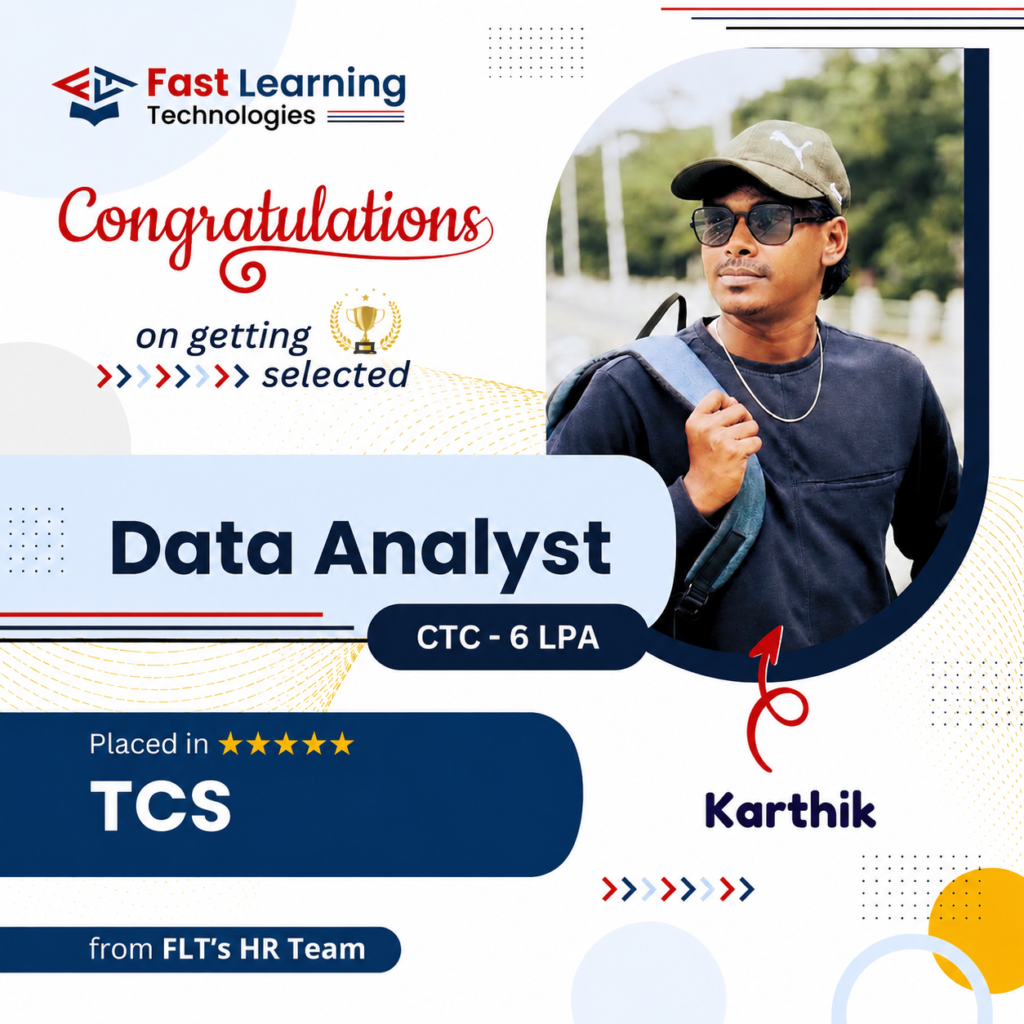
Our Alumni's Are Placed At
Course Curriculum
- What is Data Science?
- Data Science vs Data Analytics vs Machine Learning vs AI
- Career Opportunities in Data Science
- Lifecycle of a Data Science Project
- Overview of Tools & Technologies (Python, R, SQL, Power BI, TensorFlow, etc.).
- Linear Algebra Essentials
- Probability & Distributions
- Descriptive & Inferential Statistics
- Hypothesis Testing & Confidence Intervals
- Correlation & Regression Analysis
- Time Series Analysis Basics.
- Python Basics & Data Structures
- Control Statements & Functions
- Libraries for Data Science (NumPy, Pandas, Matplotlib, Seaborn)
- Data Wrangling & Preprocessing
- Data Visualization with Python
- Automating Data Workflows with Python.
- Introduction to Databases (MySQL, PostgreSQL)
- Writing SQL Queries (SELECT, INSERT, UPDATE, DELETE)
- Joins, Subqueries & Indexing
- Data Aggregation & Grouping
- Data Warehousing & ETL Concepts
- NoSQL Databases (MongoDB).
Excel & Advanced Excel
- Pivot Tables, VLOOKUP, HLOOKUP
- Data Cleaning & Validation
- Macros & Automation
Power BI & Tableau
- Creating Dashboards & Reports
- Data Modeling & DAX Functions
- Connecting to Multiple Data Sources
- Introduction to Machine Learning
- Supervised vs Unsupervised Learning
- Regression Techniques (Linear, Multiple, Polynomial)
- Classification Models (Logistic Regression, SVM, Decision Trees, Random Forest)
- Clustering (K-Means, DBSCAN, Hierarchical)
- Model Evaluation Metrics (Confusion Matrix, ROC, Precision-Recall)
- Feature Engineering & Data Scaling
- Introduction to Neural Networks
- TensorFlow & Keras Basics
- Artificial Neural Networks (ANN)
- Convolutional Neural Networks (CNN) for Image Processing
- Recurrent Neural Networks (RNN) for Time-Series Data
- Generative Adversarial Networks (GANs)
- Hyperparameter Tuning & Model Optimization.
- Text Processing & Tokenization
- Sentiment Analysis & Text Classification
- Named Entity Recognition (NER)
- Chatbot Development with NLP.
- Introduction to Big Data Technologies (Hadoop, Spark)
- Cloud Data Platforms (AWS, Google BigQuery, Azure)
- Streaming Data Processing.
- Two – Real time Industry Projects
- Resume Building & Portfolio Development
- Data Analytics Case Studies & Best Practices
- Mock Interviews & Placement Assistance
Hands-On Projects to Strengthen Your Portfolio
CI/CD Pipeline Automation for Enterprise Applications
Tools Used: Jenkins, Docker, Git, Kubernetes
Containerized Storage Management System
Tools Used: Docker, Kubernetes, AWS EBS
Kubernetes Cluster Monitoring and Server Management
Tools Used: Kubernetes, Prometheus, Grafana
Infrastructure as Code (IaC) Automation Project
Tools Used: Terraform, AWS, Ansible
Enterprise Log Management and Storage Analytics Platform
Tools Used: ELK Stack, Docker, Linux
Automated Docker Container Deployment System
Tools Used: Docker, Jenkins, GitHub
Cloud-Based Application Scaling and Load Balancing Solution
Tools Used: AWS ELB, Auto Scaling, Kubernetes
Centralized Server Configuration Management using Ansible
Tools Used: Ansible, Linux, AWS EC2
DevSecOps Security Monitoring and Vulnerability Scanning Platform
Tools Used: Jenkins, SonarQube, Docker, OWASP
Enterprise Backup, Recovery, and Storage Optimization System
Tools Used: AWS Backup, S3, Linux, Terraform
Trainer profile

Kiran Babu
Data Scientist with 10 years of experience in analytics, modeling, and AI solutions.

Arun
Senior Data Scientist with 13 years of expertise in machine learning and big data.

Karthik
Data Science professional with 10 years of hands-on experience in predictive modeling.

Anu
Experienced Data Scientist with 11 years in data analysis, visualization, and ML projects.

Priya
Data Scientist with 8 years of practical experience in statistical modeling and AI implementation.
Course batch schedule
| Date | Course | Batch | Timings |
|---|---|---|---|
| 18 May | Python | New Batch | 8 AM - 9 AM |
| 18 May | SQL | New Batch | 6 PM - 7 PM |
| 21 May | Excel | New Batch | 9 AM - 10 AM |
| 21 May | Power BI | New Batch | 2 PM - 3 PM |
| 23 May | AWS | New Batch | 5 PM - 6 PM |
| 23 May | Frontend | New Batch | 10 AM - 11 AM |
| 27 May | Linux | New Batch | 4 PM - 5 PM |
| 30 May | Data Science | New Batch | 8 AM - 9 AM |
| 30 May | Machine Learning | New Batch | 5 PM - 6 PM |
| 03 Jun | AI | New Batch | 8 AM - 9 AM |
Get Certified & Prove Your Industry Readiness
Students Placements
DevOps Course Fee and Duration
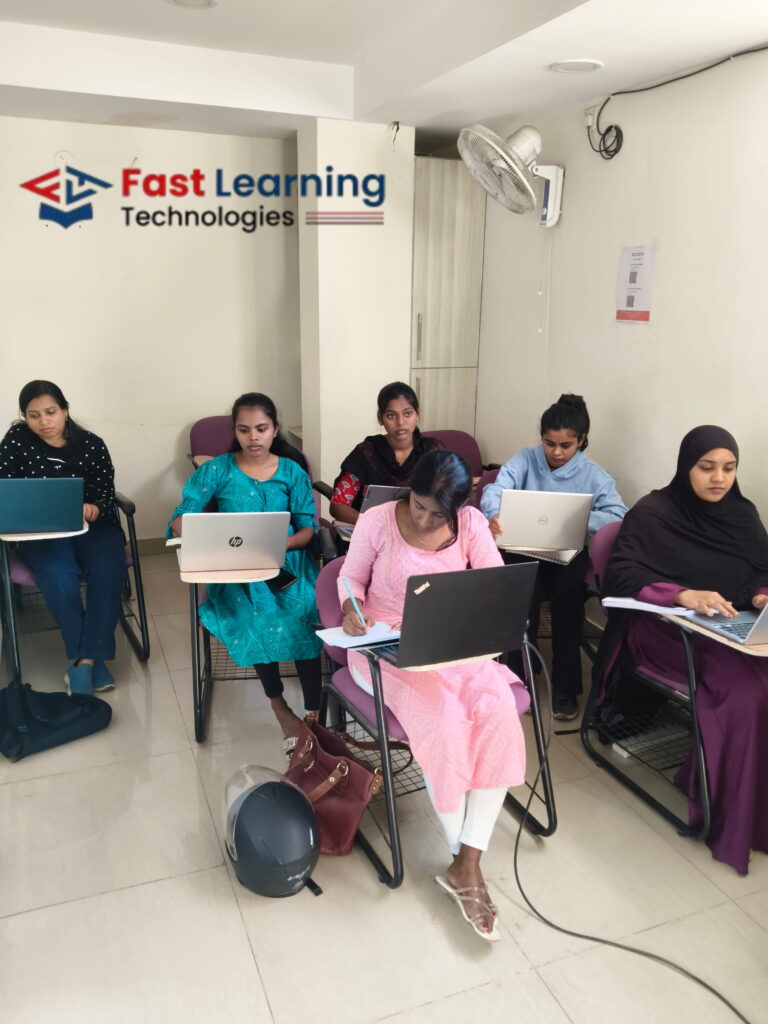
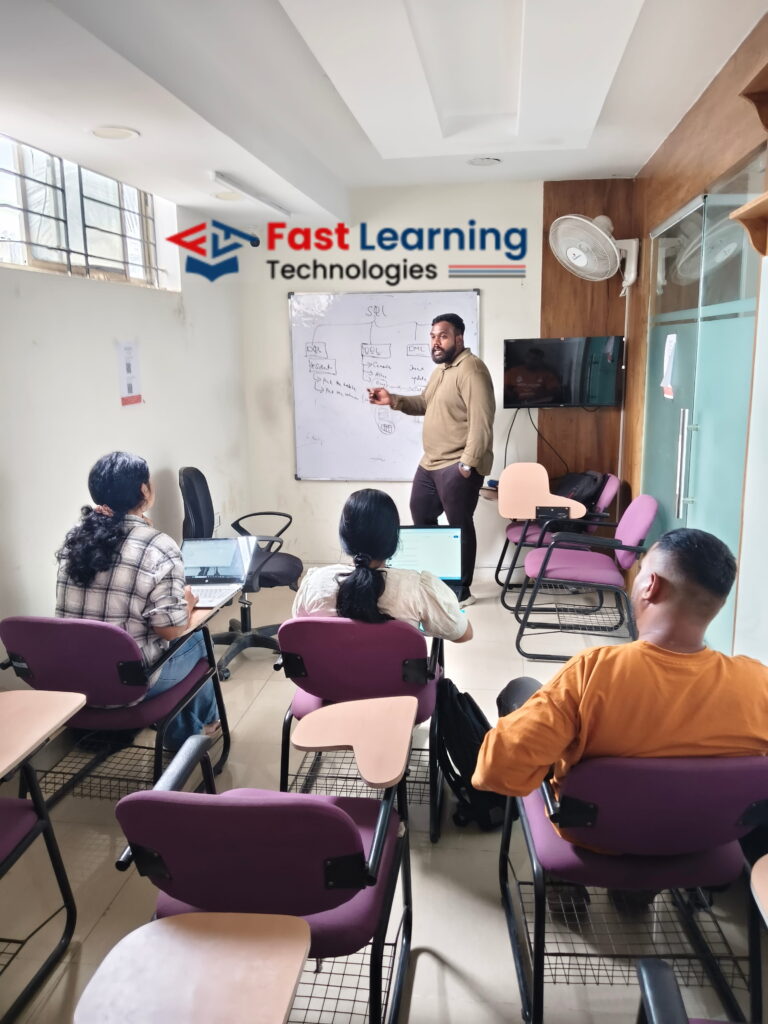
Classroom Sessions
35,000/- Offer price
- Fees payable in up to 3 installments
- 0% Interest EMI – Pay in Easy Installments (though education financing partners)
- Cost-effective courses with high ROI, making it worth every penny you invest.
Students Review
Frequently Asked Questions (FAQ)
Fast Learning Technologies offers a practical DevOps course with placement support in Bangalore. The course covers Linux, Git, Jenkins, Docker, Kubernetes, AWS basics, CI/CD pipelines, real-time projects, resume guidance, and interview preparation.
Yes. Beginners can join this course. The training starts with basic DevOps concepts, Linux fundamentals, and Git before moving into Jenkins, Docker, Kubernetes, AWS, and project work.
The course covers important DevOps tools and concepts such as Linux, shell scripting, Git, GitHub, Jenkins, CI/CD pipelines, Docker, Kubernetes basics, AWS cloud basics, monitoring, logging, and real-time projects.
After completing the course and gaining enough practice, you can apply for roles such as Junior DevOps Engineer, DevOps Engineer, Build Engineer, Release Engineer, Cloud DevOps Associate, Automation Engineer, and SRE Trainee.
Yes. Bangalore has a strong IT, startup, cloud, and product development ecosystem. Many companies need DevOps professionals to manage automation, deployment, cloud infrastructure, containers, and CI/CD workflows.