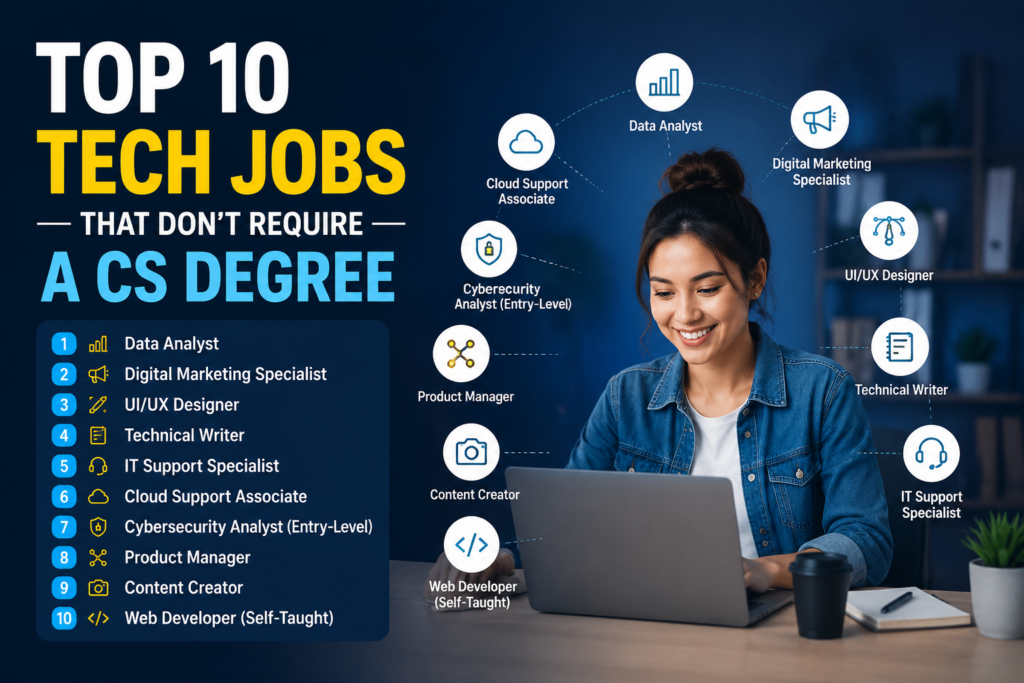
Build a Successful Technology Career Without a Computer Science Degre
Tech jobs without a CS degree are becoming more popular as companies focus on skills, experience, and practical knowledge rather than only academic qualifications. Many people believe that a career in technology is only possible after completing a Computer Science (CS) degree. But that is no longer true.
The technology industry has changed. Companies today focus more on practical skills, certifications, project experience, and problem-solving abilities. A person with the right skills can enter the tech field even without a traditional computer science background.
Whether you come from commerce, arts, engineering, business, or any other field, you can build a strong career in technology by learning the right tools and gaining hands-on experience.
At Fast Learning Technologies, learners can develop industry-relevant skills through practical training programs designed to prepare them for modern technology careers.
Here are the top 10 tech jobs that do not require a CS degree.
1. Data Analyst
Data is one of the most valuable resources for businesses today. Companies need professionals who can collect, organize, and analyze data to make better decisions.
A Data Analyst role does not always require a computer science background. Many successful data analysts come from business, mathematics, finance, and other fields.
Skills Required:
- Excel and advanced spreadsheets
- SQL database queries
- Data visualization tools like Power BI or Tableau
- Basic Python for data analysis
- Understanding of statistics
Job Responsibilities:
- Analyze business data
- Create reports and dashboards
- Identify trends and patterns
- Help companies make data-driven decisions
With the growing importance of analytics, Data Analyst jobs are among the best entry points into the technology industry.
2. Digital Marketing Specialist
Technology is not limited to coding and software development. Digital marketing combines technology, creativity, and business strategy.
Companies need digital marketing professionals who can improve online visibility, attract customers, and increase sales.
Skills Required:
- Search Engine Optimization (SEO)
- Google Ads
- Social media marketing
- Content marketing
- Email marketing
- Analytics tools
Career Opportunities:
- SEO Specialist
- Performance Marketing Executive
- Social Media Manager
- Content Strategist
A strong understanding of digital tools can help you build a successful technology-driven marketing career without a CS degree.
3. UX/UI Designer
UX/UI design is one of the fastest-growing careers in technology. UX designers focus on improving user experience, while UI designers create attractive and easy-to-use interfaces.
You do not need advanced programming skills to become a UX/UI designer.
Skills Required:
- Figma
- Adobe XD
- Wireframing
- User research
- Design principles
- Prototyping
Job Responsibilities:
- Design websites and mobile applications
- Improve user experience
- Create visual designs
- Work with developers and product teams
Creative thinkers with design skills can build excellent careers in UX/UI design.
4. Cybersecurity Analyst
Cybersecurity has become a major priority for organizations worldwide. Companies need professionals who can protect their systems, networks, and customer information.
A CS degree can help, but practical cybersecurity skills are equally valuable.
Skills Required:
- Network security basics
- Ethical hacking concepts
- Security tools
- Risk assessment
- Threat monitoring
Career Opportunities:
- Security Analyst
- SOC Analyst
- Ethical Hacker
- Information Security Specialist
Cybersecurity certifications and practical training can help beginners enter this high-demand field.
5. Cloud Computing Specialist
Cloud technology has transformed how businesses store data and run applications. Companies use platforms like AWS, Microsoft Azure, and Google Cloud to manage their digital infrastructure.
You can start a cloud career without a computer science degree.
Skills Required:
- Cloud fundamentals
- AWS or Azure basics
- Networking concepts
- Server management
- Cloud security
Popular Roles:
- Cloud Support Associate
- Cloud Administrator
- Cloud Engineer
Learning cloud technologies can open doors to many high-paying technology careers.
6. Software Tester / QA Engineer
Software testing is another excellent technology career option for non-CS graduates.
Quality Assurance (QA) professionals ensure that applications work correctly before they reach users.
Skills Required:
- Manual testing
- Automation testing basics
- Testing tools
- Bug reporting
- Basic programming knowledge
Responsibilities:
- Find software problems
- Test applications
- Improve product quality
- Work with development teams
Many professionals begin their IT journey through software testing because it focuses more on logical thinking than advanced coding.
7. Business Analyst
A Business Analyst connects business needs with technology solutions.
This role is perfect for people who understand business processes and enjoy solving problems.
Skills Required:
- Requirement analysis
- Communication skills
- Documentation
- Data analysis
- Project management basics
Responsibilities:
- Understand business problems
- Communicate with technical teams
- Create project requirements
- Improve business processes
Business Analysts play an important role in software and technology projects.
8. IT Support Specialist
IT support is one of the easiest ways to start a technology career.
Every organization needs professionals who can solve computer, software, and network-related issues.
Skills Required:
- Operating systems
- Hardware troubleshooting
- Networking basics
- Technical communication
- Problem-solving
Career Growth:
IT Support Specialist → System Administrator → Cloud Engineer → IT Manager
This career path allows beginners to gain real industry experience and grow into advanced technology roles.
9. AI Prompt Engineer
Artificial Intelligence has created new career opportunities that did not exist a few years ago.
Prompt Engineers help businesses use AI tools effectively by creating better instructions and workflows.
Skills Required:
- Understanding AI tools
- Problem-solving
- Communication skills
- Content creation
- Basic automation knowledge
Responsibilities:
- Create effective AI prompts
- Improve AI-generated results
- Build AI workflows
- Help teams use AI efficiently
AI-related skills are becoming valuable across industries, making this an exciting career option.
10. Project Coordinator in Technology
Technology projects need professionals who can manage timelines, teams, and communication.
A Project Coordinator does not need deep coding knowledge but requires strong organizational skills.
Skills Required:
- Project management tools
- Communication
- Documentation
- Team coordination
- Agile methodology basics
Job Responsibilities:
- Track project progress
- Coordinate teams
- Manage deadlines
- Communicate updates
This role can become a pathway toward Project Manager and Technology Leadership positions.
How to Start a Tech Career Without a CS Degree
A successful technology career depends on skills, not only degrees.
Follow these steps:
1. Choose One Technology Field
Do not try to learn everything at once.
Pick a career path based on your interest:
- Data
- Design
- Marketing
- Cloud
- Cybersecurity
- Testing
- AI
2. Learn Industry-Relevant Skills
Focus on practical tools used by companies.
Examples:
- SQL
- Python
- Power BI
- AWS
- Figma
- Digital marketing tools
- Testing frameworks
3. Build Real Projects
Projects help you show your skills to employers.
Create:
- Data dashboards
- Websites
- Marketing campaigns
- UI designs
- Testing reports
- AI workflows
4. Get Certifications
Certifications can improve your credibility.
Popular certifications include:
- Google Career Certificates
- AWS Certifications
- Microsoft Certifications
- Cybersecurity Certifications
5. Gain Practical Experience
Internships, freelance projects, and personal projects can help you build confidence and improve your resume.
Why Skills Matter More Than Degrees in Technology
The technology industry keeps evolving. New tools and platforms appear every year.
Employers need people who can adapt, learn quickly, and solve problems.
A degree can provide a foundation, but practical skills create opportunities.
Many successful technology professionals started from different educational backgrounds and built careers through continuous learning.
Start Your Technology Career With Fast Learning Technologies
Breaking into the technology industry does not require a Computer Science degree.
With the right training, practical skills, and dedication, anyone can build a successful career in technology.
Fast Learning Technologies helps learners develop job-ready skills through industry-focused training programs designed for modern career opportunities.
Start learning today and take your first step toward a successful technology career.
Frequently Asked Questions (FAQs)
1. Can I get a tech job without a CS degree?
Yes. Many technology jobs focus on skills, certifications, and practical experience rather than only academic qualifications.
2. Which tech job is easiest to start without coding?
Digital marketing, UX/UI design, IT support, software testing, and business analysis are good options for beginners.
3. Do I need programming knowledge for a technology career?
Not every technology job requires programming. However, learning basic coding can improve your career opportunities.
4. How long does it take to learn tech skills?
The learning time depends on the career path. With consistent practice, beginners can develop job-ready skills within a few months.
5. Which technology career has the highest growth?
Fields like artificial intelligence, cloud computing, cybersecurity, and data analytics have strong future growth opportunities.